Skip to content

Cart

Need assistance? Contact us or browse our collections to find something you love!

Join the #GLFamily

Receive an exclusive 10% coupon on your first online order and stay in the loop with the latest news and special promotions.

Behind the Gown: How a Custom Dress Comes to Life

Written By Danielle Naer

August 26, 2026

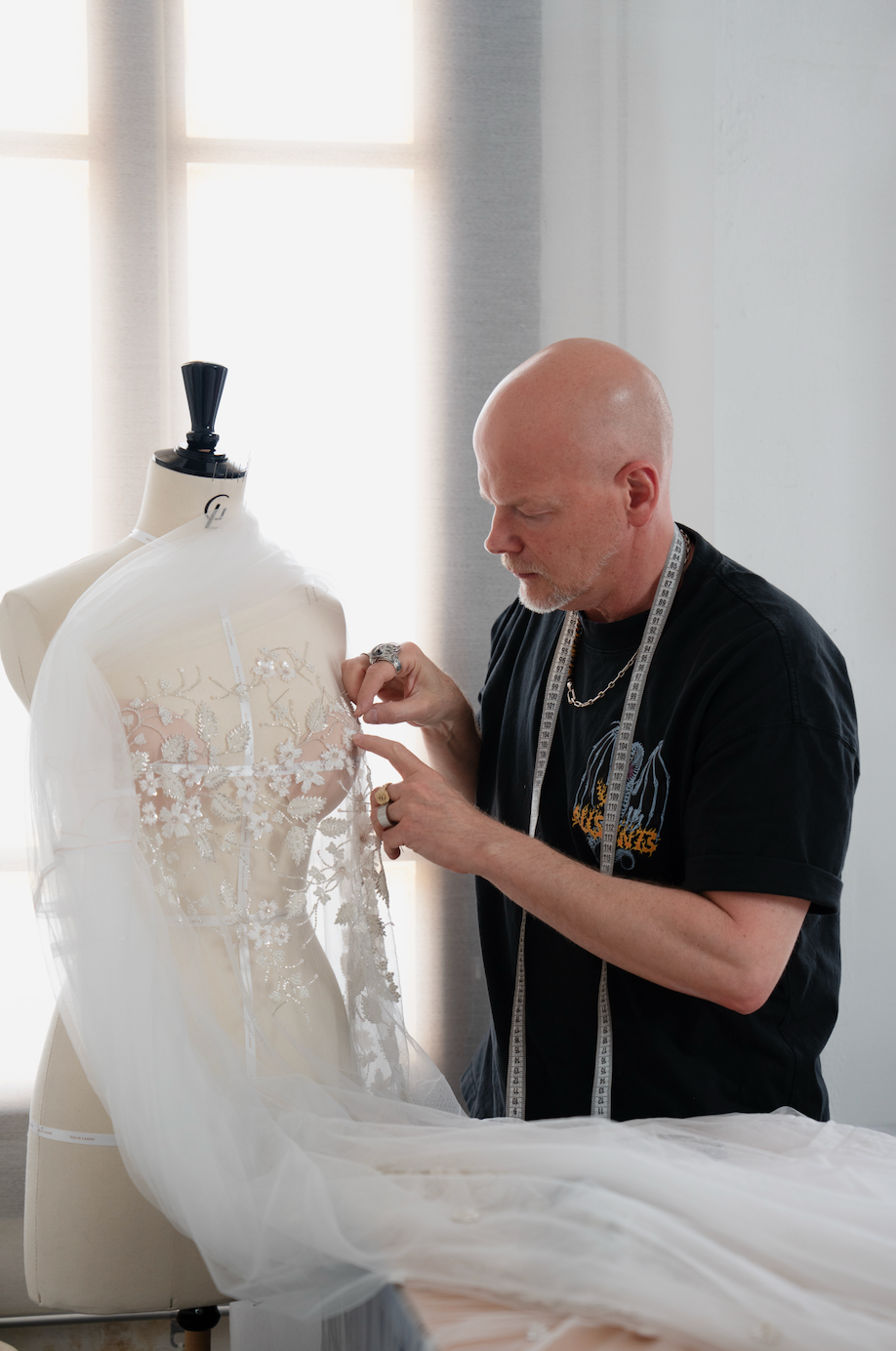
Behind the seams with head designer Sharon Sever reveals the artistry behind each and every custom GL gown.

Though the bridal wear brand offers everything from ready-to-wear to made-to-order pieces, couture remains its most intimate expression: a process that begins not with fabric, embellishment, or silhouette, but with the woman herself.

“I try to understand who she becomes when she feels powerful. Not her Pinterest board or the wedding theme. The real question is: who walks into the room?” Sever says.

It’s the question he returns to before a sketch is ever drawn.

Some brides want softness.
Others want drama.

Others, as Sever puts it, want to look like they “ruined someone’s life in Monte Carlo,” laughs Sever. Understanding that instinct becomes the foundation for everything that follows.

“A couture gown is psychology in silk”

Sharon Sever - Head Designer at Galia Lahav

The romance of couture often centers on the finished gown, but the reality is far more intricate.

What begins as an idea is translated through dozens of decisions, fittings, and revisions. A sketch becomes a toile. Fabrics are tested and swapped. Embroidery is sampled. Proportions are adjusted. Corsetry is engineered beneath layers of lace and tulle. Along the way, the dress evolves—but so does the bride.

That's what Sever finds most fascinating about the process. Brides often arrive with references, Pinterest boards, and a clear sense of what they think they want—only to discover something entirely different once they see themselves in three dimensions. By the final fitting, the gown rarely looks exactly as it did in the bride’s head originally. Instead, it becomes an interpretation of this initial vision, melded with everything she learned about herself along the way.

For brides who have ever wondered what happens between that first spark of inspiration and the moment they step into their finished gown, we sat down with Sever to discuss the full journey behind a couture gown—from initial concept to final fitting—and the craftsmanship, creativity, and intuition required to bring it to life.

GL: Can you walk us through the evolution from an abstract idea to a first sketch? What happens after the first sketch is complete?

SS: “Usually it begins with a feeling, not a dress. A film, a woman, a piece of lace, a mood I can’t stop thinking about. The first sketch happens very quickly and emotionally. After that, the atelier takes over. We drape, rebuild, cut, adjust proportions, test movement. Sometimes the final gown becomes even better than the original sketch because reality pushes the idea further.”

GL: How do you balance the fantasy of couture with the realities of construction and wearability?

SS: “That’s the real work. Fantasy is easy if the bride can’t move. Couture has to feel effortless, even when the inside of the gown is pure engineering. Corsetry, balance, tension, proportion. I always say that if the bride looks uncomfortable, the illusion is broken. The dream still has to survive the dance floor.”

GL: How do you decide which fabrics, embellishments, or embroidery techniques will bring a concept to life?

SS: “Fabric already has a personality. Some fabrics whisper and some demand attention immediately. I work very instinctively with textiles because the wrong fabric can completely flatten a strong idea. I love contrast: delicate embroidery on a sharp silhouette, or heavy corsetry hidden under something transparent. That tension feels modern to me.”

GL: Can you describe what’s happening inside the atelier once a design enters production?

SS: “Controlled chaos. Steam, pins, fittings, coffee, last-minute genius. People imagine couture as something quiet and precious, but an atelier is incredibly alive. Everyone is obsessing over millimeters because sometimes moving one seam completely changes the attitude of the dress.”

GL: What are fittings really like behind the scenes? Have you ever had a bride change direction midway through the process?

SS: “All the time. A bride can start with ‘quiet luxury’ and end up wanting a crystal corset and a four-meter train by the third fitting. Fittings are emotional because the bride is discovering herself in real time. My job is not to panic creatively. Sometimes the unexpected change leads to the strongest result.”

GL: Is there a particular moment in the process that feels the most emotional or rewarding for you?

SS: “Yes. It’s usually the moment when the bride suddenly stands differently. Her posture changes, her face changes, and the whole room feels it. That’s when the gown stops being fabric and becomes part of her identity.”

GL: What’s the reaction you hope for when a bride sees herself in the finished gown for the first time?

SS: “Silence. The best reactions are never loud. It’s that little pause where she forgets everyone else is in the room. I want her to feel like the most elevated version of herself, not like she’s wearing a costume.”

GL: In an era of fast fashion and instant gratification, why do you think couture still matters?

SS: “Because couture is the opposite of disposable culture. Everything today moves fast, looks the same, and disappears instantly. Couture still asks for time, craftsmanship, and individuality. I think modern brides are craving that more than ever. Not perfection — identity.”

Ready to start your Galia Lahav custom journey? Make an appointment for one of our boutiques here.

You may also like

One Step at a Time!

Try at Home items and regular items must be ordered separately. Please complete or remove your current order before adding this item to your cart.