Anatomy of a Couture Gown
Written By Jessica Booth
A couture wedding gown stands out among other options because of the way it was created. Designers rely on their creative vision and dressmaking skills to put together a gown that has both a luxurious and more personalized feel, using intricate handcrafted details, sumptuous fabrics, and unique silhouettes to tell a story. Hours of work go into one single dress to achieve a stunning finishing product.
While couture gowns are unique by nature, their design does rely on a formula of sorts. The basic structure of a couture gown typically includes boning and a layered foundation, both of which work to elevate classic silhouettes in a more artistic way and ultimately result in a one-of-a-kind creation. Below, we explore the anatomy of a couture gown, going over many of the little details that go into their design.
Corsetry
The inner architecture is key when it comes to a couture gown. Corsets are an essential part of this as they offer boning for support and stability, giving the gown the structure it needs. They are typically form fitting with sculpted bra cups, but not uncomfortable. In couture gowns, corsets are there to create a specific shape and to fit the bride perfectly, not to be restrictive. In the Hudson gown from Galia Lahav’s Keepsake Collection, you can see how the corset bodice helps give the dress a more three dimensional look.
-
Lace
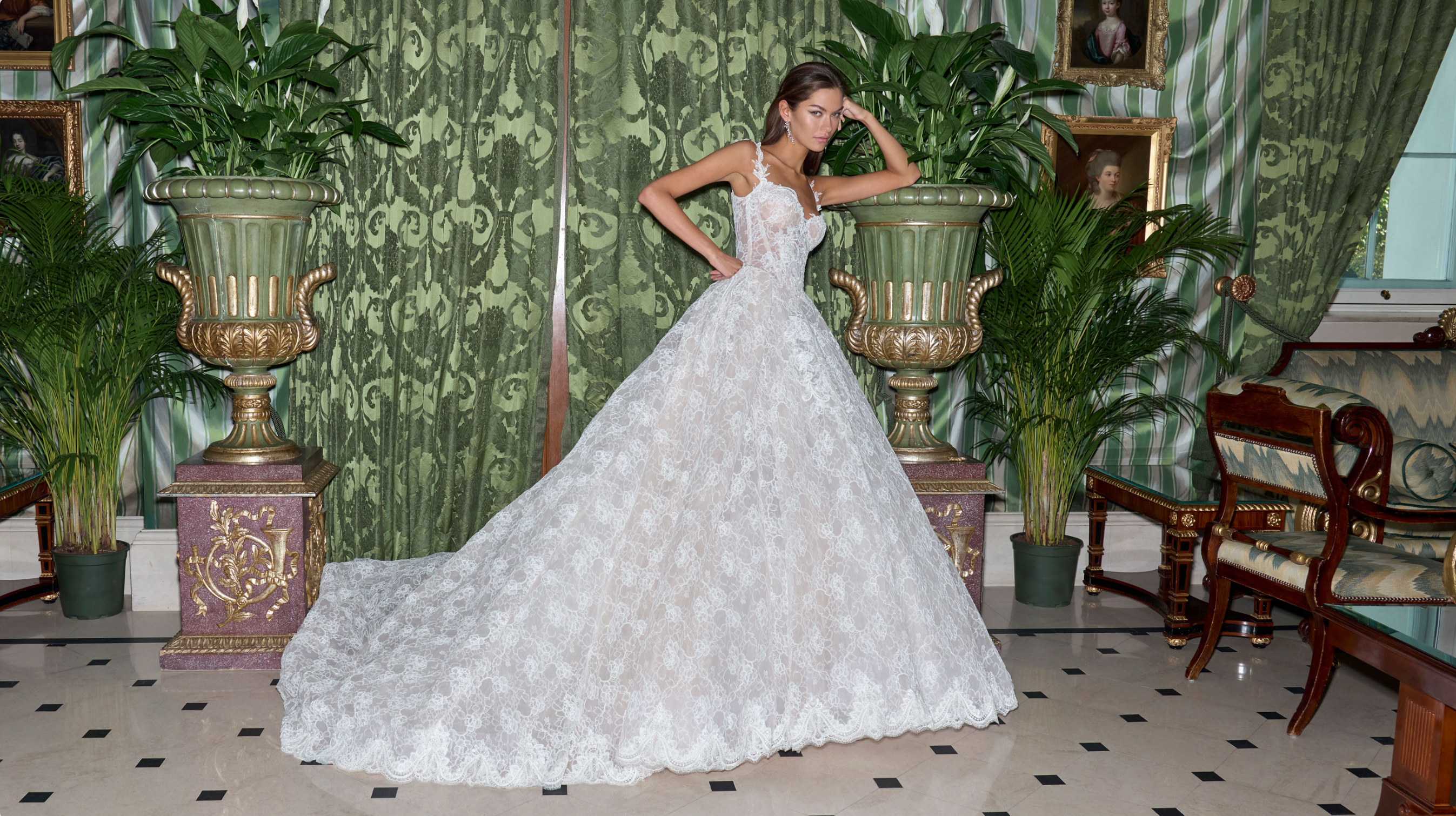
Lace is never an afterthought in a couture gown. Instead, it’s an important part of the intricate craftsmanship that goes into the gown and is seen as a sign of romance and elegance with a timeless feel. Its placement is always intentional, meant to highlight the bride’s body, create dimension, and add interesting detail. For a couture gown, only the most high-end, luxurious fabrics are going to be used, so you can expect the lace to be beautifully detailed.
The Bleecker gown, from Galia Lahav’s Keepsake Collection, is a showstopping example of how all-over lace can make a simple silhouette feel like a work of art.
Embroidery
Carefully detailed embellishments are a hallmark of couture gowns, found in the form of lace, custom beading appliques, and embroidered designs. Embroidery in particular is a way for the designer to show off their skill, as it is typically applied by hand and involves a very creative eye. Aside from adding dimension and texture to the gown, intentionally placed embroidery will flatter and flow with the bride, enhancing the silhouette of the gown and moving with the body in a way that feels natural.
Couture embroidery will generally involve 3D florals, beads, or pearls, and can even be colorful. In the Fiori gown from Galia Lahav’s Kiss & Tell Bridal Couture collection, an organza ball gown covered in a bright floral pattern, you can see a gorgeous example of colorful embroidery. The Lilith gown, also from the Kiss & Tell collection, shows how 3D floral embroidery can transform a simple silhouette into something more structural and interesting.
Trains
The train, an extension of fabric that flows out behind the bride, adds drama in all the right ways. With a couture gown, trains can add a tremendous amount of detail, enhance the silhouette, and make the dress feel even more glamorous and unique. There are several different kinds of trains that vary in length, but you’ll often find that couture wedding gowns feature longer, more voluminous trains, such as the sweeping train of the Astor gown from Galia Lahav’s Keepsake collection. Cathedral and monarch trains have an extravagant feel that often works well with a couture gown, but sweep and chapel trains are also beautiful options.
-
Veils
It shouldn’t come as a surprise that the veils that often accompany a couture wedding gown are similarly extravagant and dramatic. These are often custom-designed to perfectly match the wedding gown, with similar embroidery, lace designs, or embellishments. They might match the silhouette of the gown and add flair with a long, flowing design, but they can also come in a more simple style to allow the gown to really shine.